




What Does a Complete Jeep Brake Service Include?
A complete Jeep brake service includes replacing worn brake pads, inspecting or resurfacing rotors, checking brake calipers and mounting hardware, inspecting hydraulic brake lines, and testing brake fluid for moisture contamination. Technicians also clean caliper slides, torque wheel lug nuts to factory specifications, and perform a road test to verify pedal feel and stopping performance.
Whether driving a 2026 Jeep Grand Wagoneer equipped with a Hurricane Twin-Turbo engine through daily stop-and-go traffic across San Jose or taking a 2026 Jeep Wrangler onto dusty off-road trails, routine braking maintenance protects critical hydraulic and mechanical components. Over time, heat, friction, and environmental debris wear down friction material. A full factory service restores original stopping power while preventing premature wear on surrounding suspension components.
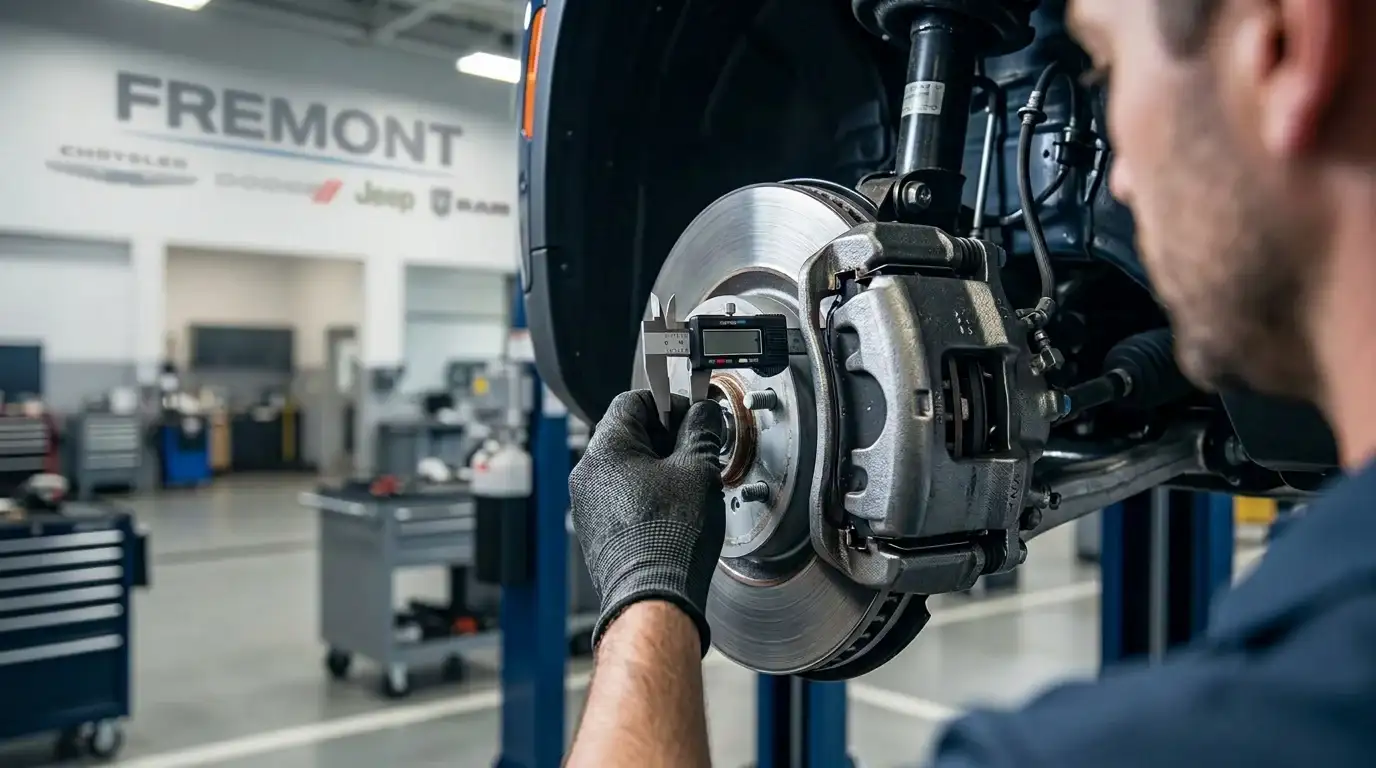
During service, certified technicians dismantle the wheel assembly to conduct a thorough evaluation. Rotor thickness is measured against minimum factory thickness thresholds with a digital micrometer to determine whether machining or replacement is necessary. Caliper pins are cleaned and lubricated with high-temperature silicone grease to ensure smooth pad retraction.
For vehicle owners traveling along East Bay and South Bay corridors, visiting our Newark service center location gives your vehicle access to factory diagnostic tools and trained technicians. If you notice soft pedal pressure or unexpected grinding, reaching out by calling (510) 257-9176 connects you directly with a knowledgeable service advisor.
Table of Contents
- What Are the Warning Signs That Your Jeep Needs Immediate Brake Service?
- What Components Are Checked During a Full Jeep Factory Brake Inspection?
- Are Ceramic or Semi-Metallic Brake Pads Best for Jeep Drivers?
- What Does Jeep Brake Service and Pad Replacement Cost in San Jose?
- Are Mopar Brake Pads Backed by Warranty Coverage?
- How Often Should Jeep Brake Fluid Be Flushed and Maintained?
- Common Questions About Jeep Brake Service
- Schedule Certified Jeep Brake Service Today
What Are the Warning Signs That Your Jeep Needs Immediate Brake Service?
High-pitched squealing, steering wheel vibration while slowing, a soft or spongy brake pedal, and extended stopping distances are the most common signs that your Jeep requires immediate brake service. Addressing these symptoms early prevents minor pad wear from causing damage to brake rotors, calipers, and hydraulic systems.
The standard squealing sound comes from a mechanical wear indicator embedded in original equipment brake pads. This small metal tab contacts the metal rotor once pad material wears down to roughly 2 to 3 millimeters, creating an audible warning before metal-to-metal scraping occurs. If that high-pitched squeal transforms into a harsh grinding sound, the friction material is completely depleted, allowing the steel backing plate to gouge the rotor face.
Vibration felt through the brake pedal or steering wheel during high-speed braking usually points to rotor thickness variation or heat distortion. When heavier SUVs like the 2026 Jeep Grand Cherokee brake hard down long highway grades, extreme temperatures can cause uneven pad material transfer onto the rotor surface. Spongy pedal feel indicates air trapped within the hydraulic lines, deteriorated flex hoses, or master cylinder internal seal wear.
When these symptoms appear, continuing to drive reduces emergency stopping capability and increases overall repair costs. Scheduling a diagnostic check early preserves remaining rotor material and prevents safety risks on the road. Vehicle owners can arrange an appointment quickly by scheduling a brake inspection online with our dedicated service team.
What Components Are Checked During a Full Jeep Factory Brake Inspection?
A full Jeep factory brake inspection evaluates the front and rear brake pads, rotors, calipers, hydraulic flex hoses, master cylinder, brake fluid moisture content, and parking brake assemblies. Every friction and hydraulic component is measured and visually checked against factory tolerances.
Factory diagnostic procedures follow a systematic multi-point process designed for four-wheel-drive and SUV brake system designs. Technicians begin by reviewing wear patterns across both inner and outer friction pads. Uneven wear between pads on the same wheel indicates sticking caliper slide pins or binding pad ears within the bracket mounting clips.
Next, the brake rotors undergo visual and dimensional testing. Technicians check for lateral runout, deep scoring, blue thermal spots from severe overheating, and rust scale buildup around the rotor edges. Hydraulic lines and flex hoses are inspected under pressure for cracking, swelling, chafing, or fluid seepage around fittings.
- Friction Components: Pad lining thickness, backing plate structural integrity, and hardware retention clips.
- Rotor Assemblies: Disc thickness, parallelism across the friction face, surface scoring, and corrosion.
- Hydraulic System: Caliper piston dust boots, bleeder valves, flex hoses, master cylinder reservoir levels, and fluid boiling point testing.
- Mechanical Controls: Parking brake cable tension, shoe lining condition on drum-in-hat setups, and pedal linkage clearance.
Using original hardware prevents pad rattle and caliper binding. Replacing worn anti-rattle springs and guide pin boots with factory-direct Mopar parts maintains proper caliper alignment and extends total friction life.
Are Ceramic or Semi-Metallic Brake Pads Best for Jeep Drivers?
Ceramic brake pads are ideal for daily commuters seeking quiet stopping and low brake dust, while semi-metallic brake pads are superior for heavy towing, off-roading, and aggressive mountain driving due to higher thermal tolerance. Choosing the right friction material depends on your primary driving environment and workload.
Ceramic friction compounds consist of dense ceramic material blended with copper or synthetic fibers. They excel at dampening noise frequencies and produce fine, light-colored dust that does not readily stick to aluminum wheels. For drivers commuting across the flat terrain of the Santa Clara Valley or navigating suburban neighborhood routes around San Jose, ceramic pads deliver smooth, clean, and quiet performance.
Semi-metallic brake pads contain 30 to 65 percent metal alloys, including steel, iron, and copper bonded by resin. This metallic formulation transfers heat away from the rotor quickly, maintaining a stable friction coefficient under elevated braking temperatures. For a 2026 RAM 1500 hauling heavy cargo or a Jeep Wrangler descending steep dirt trails in the Diablo Range, semi-metallic pads resist high-temperature brake fade far better than ceramic alternatives.
Semi-metallic pads do produce darker metallic dust and cause slightly higher rotor wear over time. If silent operation and clean wheel surfaces are your top priorities, ceramic pads offer the ideal balance. If trail performance, heavy towing capacity, or steep hill descents define your driving routine, semi-metallic pads deliver maximum high-heat stability.
What Does Jeep Brake Service and Pad Replacement Cost in San Jose?
Jeep brake pad replacement alone typically costs between $150 and $300 per axle, while a complete brake service including new pads and rotors ranges from $250 to $500 per axle depending on vehicle size and friction material choice. Regional labor rates and component specifications influence total service pricing.
Brake service costs reflect part construction and the precise labor required to service modern safety systems. Front brake assemblies handle approximately 70 percent of total vehicle stopping force, causing front pads and rotors to wear down faster than rear components. Larger SUVs equipped with multi-piston calipers require wider friction pads and larger vented rotors, which increases material costs compared to compact crossovers.
In high-density commuting corridors like San Jose, maintaining braking efficiency requires quality parts and proper installation techniques. A standard pad replacement involves installing new friction linings, replacing pad retention hardware, and greasing slide pins. A full axle overhaul adds rotor resurfacing or replacement along with flushing contaminated hydraulic fluid.
Investing in a complete axle service rather than placing new pads on worn, uneven rotors prevents noise, pedal pulsation, and premature friction failure. Proper surface preparation and correct fastener torque ensure maximum longevity from your new braking components.
Are Mopar Brake Pads Backed by Warranty Coverage?
Yes, replacement Mopar brake pads are backed by factory warranty protection, including limited lifetime replacement coverage on select Mopar friction lines when installed by an authorized dealership. Factory-installed brake pads on new vehicles are covered under the initial wear-and-tear warranty for 12 months or 12,000 miles, whichever comes first.
Mopar provides structured warranty programs to protect owners against component and manufacturing defects. Standard replacement Mopar parts come with a 24-month / unlimited-mileage warranty covering parts and dealer labor. Select Mopar Value Line brake pads feature a limited lifetime warranty that covers pad friction wear for as long as the registered owner keeps the vehicle.
Knowing what factory warranty protection covers helps owners manage ownership costs effectively:
- Defect Protection: Covers friction material delamination, backing plate separation, and manufacturing defects in materials or assembly.
- Labor Coverage: When replacement parts are purchased and installed at an authorized service center, warranty repairs cover both the parts and professional labor.
- Warranty Exclusions: Wear beyond defined terms, damage caused by neglected calipers or unserviced rotors, off-road racing, and improper fluid maintenance are excluded from warranty coverage.
To maintain active warranty coverage, keep detailed maintenance invoices showing recommended service intervals. Choosing genuine factory parts ensures replacement pads conform exactly to original engineering standards for stopping performance and thermal resistance.
How Often Should Jeep Brake Fluid Be Flushed and Maintained?
Jeep brake fluid should be tested and flushed every two years or every 20,000 to 30,000 miles to remove absorbed moisture, protect internal hydraulic valves, and preserve high fluid boiling points. Fresh fluid keeps brake pedal pressure firm and consistent.
Brake fluid is hygroscopic, meaning it constantly absorbs water vapor through rubber flex lines and reservoir cap vents. Once moisture content rises above 3 percent, the boiling point drops sharply. Under heavy braking down long highway descents or during hot summer traffic, superheated moisture can vaporize into steam pockets, resulting in sudden pedal travel and loss of hydraulic braking pressure.
Moisture also triggers internal corrosion on steel brake lines, caliper pistons, and expensive anti-lock braking system (ABS) hydraulic control modules. Diagnostic fluid tests measure moisture percentage and copper content to identify fluid degradation before internal components sustain rust damage.
Flushing the hydraulic system involves bleeding old fluid from all four wheel calipers while pressure-feeding fresh Mopar DOT 3 or DOT 4 fluid into the master cylinder. Drivers planning routine maintenance can visit our Newark service center location for fluid testing and hydraulic service. You can also consult with a service advisor by calling (510) 257-9176 today.
Common Questions About Jeep Brake Service
Q: Does a 2027 Jeep warranty cover routine brake pad wear, and what should owners ask before approving service?
Routine brake pad wear resulting from normal driving is classed as a wear-and-tear item and is generally not covered past the initial 12-month or 12,000-mile factory adjustment window. Before approving repair work, owners should ask whether the replacement friction pads carry Mopar parts warranty coverage, whether rotor thickness allows resurfacing instead of full replacement, and if new hardware clips are included in the estimate.
Q: Is it necessary to replace brake rotors every time you replace brake pads on a Jeep?
Replacing rotors with every pad change is not mandatory if the rotor thickness measures comfortably above factory minimum discard specifications and shows no lateral runout, heat checking, or deep grooves. However, resurfacing or replacing rotors alongside new pads ensures an even contact face, eliminating noise, pedal pulsation, and premature pad wear.
Q: Why do Jeep brakes squeak in the morning or after damp weather?
Morning brake squeal is usually caused by a thin film of surface rust that forms on cast-iron brake rotors overnight due to humidity or rain exposure. This surface oxidation quickly wears off during the first few brake applications while driving, restoring quiet operation without requiring mechanical repair.
Q: How does off-roading impact Jeep brake inspection frequency?
Off-road driving exposes brake hardware to sand, mud, water, and fine gravel, which can lodge between friction pads and rotors or damage caliper piston dust seals. Vehicles frequently driven on unpaved trails should undergo visual brake inspections and caliper slide cleaning after severe off-road trips or every 5,000 miles.
Q: Can bad brake fluid cause ABS warning lights to illuminate?
Severely degraded or aerated brake fluid can cause pressure drops or internal valve sticking inside the ABS hydraulic control module, triggering a dashboard warning light. Flushing contaminated fluid and bleeding air from the hydraulic lines often restores correct pressure balance and clears module error codes.
Schedule Certified Jeep Brake Service Today
Protecting your vehicle’s stopping power requires certified technicians who understand factory braking systems and maintenance specifications. Whether your Jeep requires routine pad replacement, fluid testing, or a comprehensive multi-point brake inspection, installing original equipment components ensures maximum reliability on every journey.
Our team is ready to inspect your braking system and complete necessary repairs using genuine Mopar parts. Take the next step toward safe driving by scheduling your service appointment online today.
© 2026 Fremont Chrysler Dodge Jeep Ram. All rights reserved
0 comment(s) so far on What Does a Complete Jeep Brake Service Include?