




How Often Does a Jeep Wrangler or Grand Cherokee Need an Oil Change?
Most modern Jeep Wrangler and Grand Cherokee models require an oil change every 7,500 to 10,000 miles, or at least once every 12 months or 350 engine hours, whichever occurs first. Vehicles subjected to severe operating conditions like frequent short trips, heavy towing, extensive idling, or off-road trail driving require more frequent oil changes, typically closer to 4,000 to 5,000 miles.
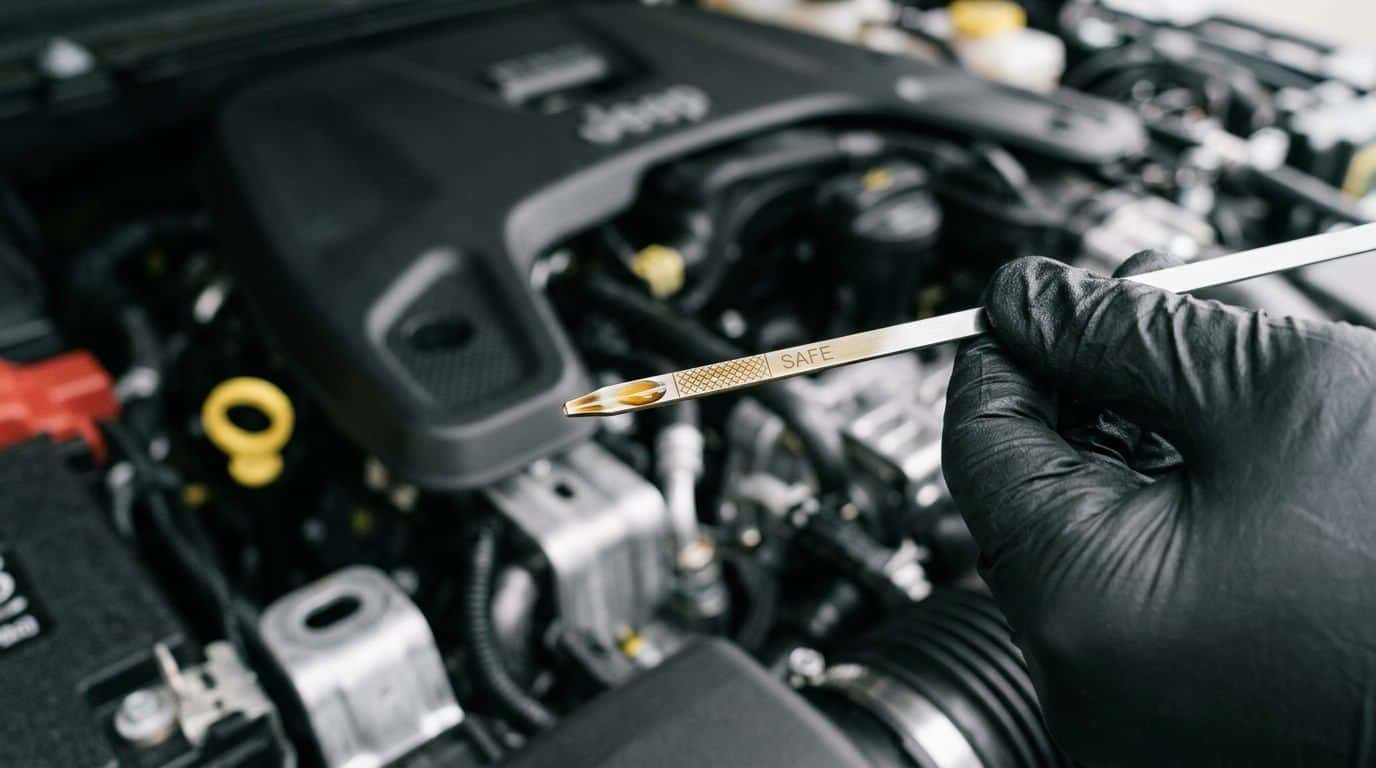
Modern Jeep vehicles come equipped with an automatic Oil Change Indicator system on the instrument cluster. This computer system monitors engine operating temperatures, engine speeds, trip lengths, and overall duty cycles to calculate oil degradation in real time. When the system displays an “Oil Change Required” warning message, service should be scheduled within 500 miles. While the system accounts for heavy loads and severe service automatically, checking the oil dipstick at every fuel stop ensures the crankcase remains properly filled between scheduled service visits.
Operating conditions in the Santa Clara Valley can accelerate fluid breakdown. Stop-and-go highway driving across San Jose during daily rush hours generates constant heat cycles and increased engine idling. These frequent short-distance trips prevent engine oil from remaining at full operating temperature long enough to burn off internal moisture and unburned fuel condensate. Consequently, the automatic monitoring system may trigger a service notification well before the 10,000-mile maximum limit.
For routine maintenance and engine oil service, drivers can visit our service department at 39639 Balentine Dr, Newark, CA 94560 or reach our service team directly at (510) 257-9176 to confirm maintenance schedules.
Table of Contents
- Is Synthetic Oil Mandatory for Modern Jeep Engines?
- What Is Included in a Certified Mopar Jeep Oil Change Service?
- What Happens If You Delay an Oil Change on a Jeep Engine?
- What Are the Annual Maintenance and Oil Change Costs for a Jeep Wrangler?
- Common Questions About Jeep Maintenance and Oil Service
- Schedule Your Jeep Oil Change Service Near San Jose Today
Is Synthetic Oil Mandatory for Modern Jeep Engines?
Full-synthetic oil is required for nearly all modern Jeep engines to maintain internal component lubrication and preserve factory warranty coverage. Manufacturer engineering standards specify exact synthetic oil specifications and Mopar material certifications for each powertrain option to ensure proper operation of variable valve timing, hydraulic lifters, and turbocharger bearings.
Using the precise oil viscosity and material standard is critical for engine longevity. For example, a Grand Cherokee powered by the 3.6L Pentastar® V6 engine mandates full-synthetic SAE 0W-20 motor oil that meets Mopar Material Standard MS-6395. Meanwhile, a Wrangler equipped with the 2.0L Turbo I4 or 2.0L 4xe plug-in hybrid powertrain requires an API SP/GF-6A SAE 5W-30 full synthetic oil engineered to meet Mopar Material Standard MS-13340. Conventional motor oils fail to meet these high-temperature shear stability standards and can lead to rapid oil breakdown, carbon deposits, and premature component wear.
Modern engines rely on oil pressure to actuate complex mechanical systems, including variable camshaft timing phase adjusters and multi-displacement cylinder deactivation solenoids. Standard conventional oils breakdown under heat faster, producing varnish that clogs tight oil passages. Equipping your vehicle with factory-approved fluids from our genuine Mopar parts and accessories department helps protect delicate internal components while maintaining peak performance across every driving condition.
What Is Included in a Certified Mopar Jeep Oil Change Service?
A certified Mopar Jeep oil change includes draining the degraded engine oil, installing an original equipment manufacturer (OEM) Mopar oil filter, refilling the engine with exact factory-spec synthetic oil, rotating all four tires, and completing a comprehensive multi-point vehicle inspection.
During the service, factory-trained technicians inspect key components under the hood and beneath the chassis to ensure long-term dependability. The multi-point safety and maintenance inspection covers:
- Inspection of brake pad thickness, brake rotors, lines, and fluid condition
- Testing of battery health, terminal connections, and charging system output
- Check of coolant level, windshield washer fluid, power steering fluid, and transmission fluid
- Visual check of engine air filter and cabin air filter condition
- Inspection of steering linkage, suspension bushings, drive shafts, and constant velocity (CV) boots
- Measurement of tire tread depth and adjustment of tire inflation pressures across all four tires
Proper filter design plays an equally important role in engine protection. OEM Mopar oil filters feature anti-drainback valves and exact micron filtration ratings designed specifically for Jeep oil pump pressures. Generic aftermarket filters often lack adequate bypass pressure valves or structural reinforcement, increasing the risk of oil starvation during cold startups. For drivers heading out from San Jose to explore weekend off-road trails in the Santa Cruz Mountains, complete maintenance inspections provide peace of mind before tackling remote elevation changes and rough terrain.
What Happens If You Delay an Oil Change on a Jeep Engine?
Delaying an oil change causes thermal degradation and oxidation of the motor oil, leading to severe sludge accumulation, increased friction, accelerated engine wear, and potential mechanical failure. As engine oil ages, its protective additive package depletes, losing its ability to neutralize combustion acids and suspend carbon particles.
Over time, degraded oil thickens into a heavy sludge that restricts flow through narrow engine galleries and oil pickup screens. This lack of lubrication directly impacts vital engine components:
- Camshafts and Variable Valve Timing (VVT) Solenoids: Sludge restricts oil pressure required to actuate hydraulic timing phasers, leading to engine misfires, rough idling, and check engine lights.
- Piston Rings and Cylinder Walls: Depleted lubrication increases metal-to-metal contact, scoring cylinder liners and causing piston rings to stick, which leads to excessive oil consumption.
- Turbocharger Bearings: On turbocharged powertrains, burnt oil deposits (coking) form around high-temperature turbine shafts, restricting oil feed lines and causing catastrophic turbo failure.
- Engine Bearings: Rod and main bearings suffer friction wear from suspended abrasive soot, eventually causing metallic knocking noises and severe internal engine damage.
Ignoring maintenance warnings or failing to replace oil within the manufacturer limits (10,000 miles, 12 months, or 350 engine hours) can also compromise factory warranty coverage. If an engine failure occurs due to oil starvation or sludge formation stemming from neglected service, repairs may not be covered under warranty.
What Are the Annual Maintenance and Oil Change Costs for a Jeep Wrangler?
Routine annual maintenance for a Jeep Wrangler generally averages between $650 and $850, depending on overall mileage, driving habits, and maintenance requirements. A standard single synthetic oil change service at a dealership in the Bay Area typically ranges from $90 to $150, covering full-synthetic Mopar oil, an OEM filter, labor, and disposal fees.
Annual upkeep costs fluctuate based on duty cycles and service milestones. A vehicle driven primarily on clean paved highways consumes fewer filters and fluids than one regularly driven through mud, dust, or deep water. Severe off-road usage requires more frequent differential fluid changes, transfer case inspections, and shorter oil change intervals.
A standard 12-month routine maintenance schedule for a Wrangler typically includes:
- Two full-synthetic oil and Mopar filter services
- Two tire rotations to ensure even tread wear across all-terrain tires
- One engine air filter replacement to maintain intake air volume
- One cabin air filter replacement to ensure clean HVAC airflow
- Full multi-point safety, suspension, and brake system inspections
Planning for scheduled service keeps long-term ownership costs predictable by preventing expensive secondary repairs caused by fluid breakdown or unaddressed mechanical wear.
Common Questions About Jeep Maintenance and Oil Service
Q: How long does a standard Jeep dealership oil change service take?
A standard express oil change at our service center typically takes approximately 30 to 45 minutes. When combined with a thorough multi-point safety inspection, tire rotation, and fluid top-off, the total service appointment usually wraps up within one hour. Owners can conveniently book an appointment through our online service scheduling portal to minimize waiting room time.
Q: What does the “Oil Change Required” message on my dashboard mean?
The “Oil Change Required” message indicates that the vehicle’s automatic duty-cycle monitoring system has calculated that engine oil life has reached the end of its useful lifespan based on engine speed, operating temperature, and trip duration. Once illuminated, service should be scheduled within 500 miles. The indicator light must be reset after new oil and a fresh Mopar filter are installed.
Q: Can I use conventional oil in my Jeep if I change it more frequently?
No, modern Jeep engines are engineered to run exclusively on synthetic oil formulations that meet specific Mopar material standards such as MS-6395 or MS-13340. Conventional oil lacks the thermal resistance and viscosity properties required for modern variable valve timing systems and high-output turbochargers, even if changed at shorter mileage intervals.
Q: How often should I check my engine oil level between service appointments?
Engine oil levels should be checked at least once every month or during every fuel stop using the engine dipstick. Modern engines naturally consume small amounts of oil during routine operation. Checking fluid levels regularly ensures the crankcase remains properly filled, preventing low oil pressure conditions between scheduled service visits.
Q: Do off-road driving and towing shorten my oil change interval?
Yes, driving on unpaved dusty roads, rock crawling, towing heavy loads, or idling for extended periods qualifies as severe driving conditions. Severe duty accelerates oil contamination and heat breakdown. When operating under these conditions, the engine oil should be replaced every 4,000 to 5,000 miles or whenever the oil monitoring system indicates service is needed.
Schedule Your Jeep Oil Change Service Near San Jose Today
Keeping up with factory-scheduled oil changes is the single most effective step you can take to protect your vehicle’s engine performance, fuel efficiency, and long-term reliability. Whether your oil change indicator light just illuminated or you are preparing for your next road trip, using genuine Mopar fluids and OEM filters ensures your powertrain receives exact factory lubrication.
For drivers coming from San Jose, accessing certified Mopar service is straightforward via I-880 North, bringing you directly to our dedicated service center. Our factory-trained technicians know every engine in the lineup—from the naturally aspirated 3.6L Pentastar® V6 to advanced 4xe plug-in hybrid systems—and complete every service using specialized tools and authentic parts.
Reach our service team directly at (510) 257-9176 or visit us at 39639 Balentine Dr, Newark, CA 94560 to keep your Jeep running at its peak.
© 2026 Fremont Chrysler Dodge Jeep Ram. All rights reserved.
0 comment(s) so far on How Often Does a Jeep Wrangler or Grand Cherokee Need an Oil Change?