




What Does a 2026 Ram Oil Service Routine Include?
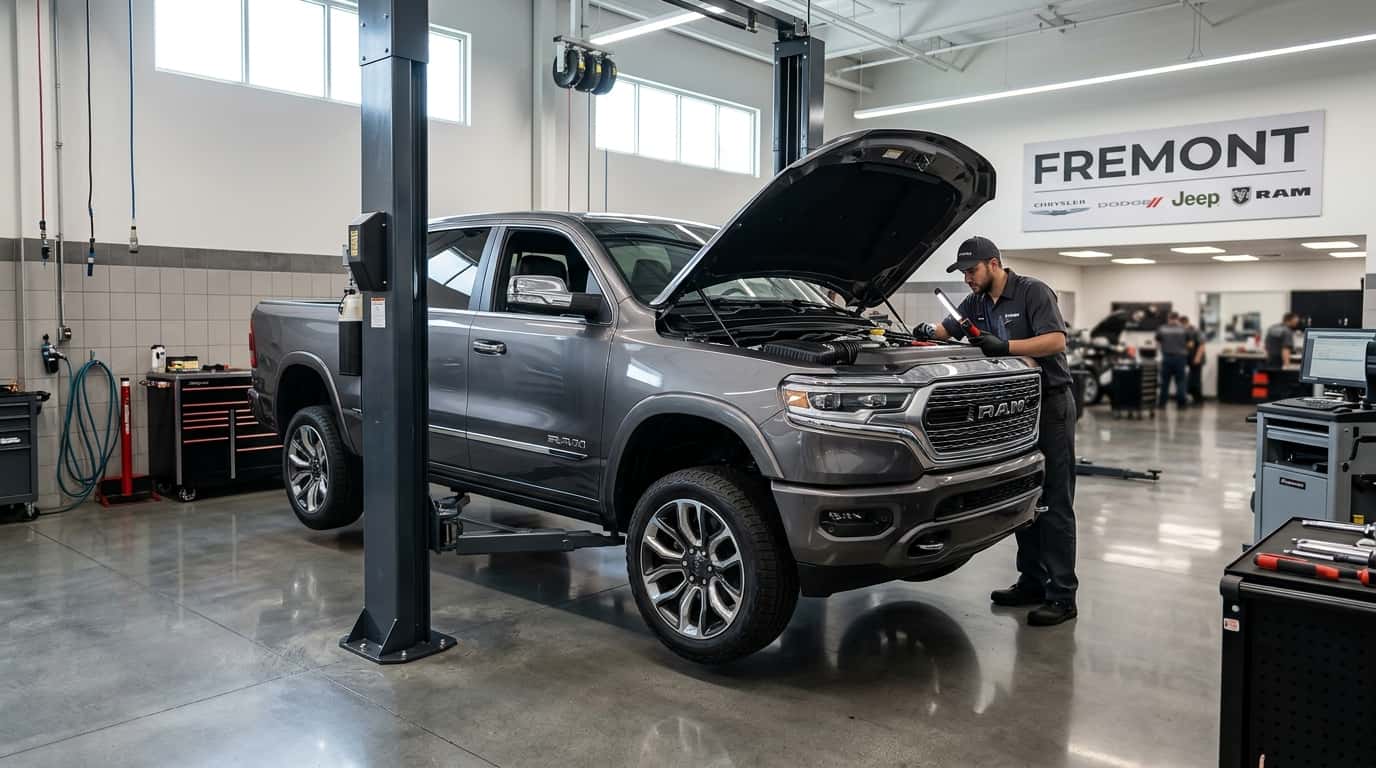
A complete 2026 Ram oil service routine includes draining the depleted engine oil, installing a fresh OEM Mopar oil filter, refilling the crankcase with manufacturer-specified synthetic or synthetic-blend oil, inspecting vital engine fluid levels, and resetting the dashboard Oil Change Indicator system. Certified technicians also perform a comprehensive multi-point inspection covering brake components, suspension linkages, battery health, and tire tread wear to ensure full vehicle safety.
Routine oil service serves as the foundational preventative maintenance procedure for both light-duty trucks and commercial work vehicles. During the appointment, technicians elevate the vehicle to inspect the undercarriage for any signs of fluid leaks, differential wear, or transfer case seepage. Fresh motor oil cushions metal-on-metal contact within the valve train and cylinder walls while washing away carbon deposits and microscopic metal shaves generated during combustion. Installing a genuine Mopar oil filter ensures that bypass valves operate at exact factory pressure thresholds, maintaining consistent oil flow even during cold morning starts.
The multi-point inspection performed alongside the oil change evaluates critical wear items before they turn into road emergencies. Technicians check the air filter, cabin air filter, coolant concentration, power steering fluid, wiper blades, and drive belts. For commercial vans and heavy-duty trucks frequently carrying cargo, steering linkage boots and ball joints are thoroughly assessed for structural integrity.
Maintaining a regular service schedule keeps your engine running reliably across demanding workday drives and long highway trips. Drivers can arrange their next routine service appointment by giving our service team a quick call or getting turn-by-turn route details to our convenient dealership location.
Table of Contents
- What Type of Oil and Capacity Does Your Ram 1500 or ProMaster Require?
- What Is the Recommended Oil Change Interval for Ram Trucks and Vans?
- How Much Does an Oil Change for a Ram Truck or Van Cost Near San Jose?
- Dealership Service vs. Independent Repair Shops: Which Is Best for Your Ram?
- Why Are Detailed Oil Change Records Vital for Used Ram Buyers and Owners?
- Frequently Asked Questions About Ram Oil and Engine Maintenance
- Protecting Your Ram Engine with Routine Service in Northern California
What Type of Oil and Capacity Does Your Ram 1500 or ProMaster Require?
The exact motor oil viscosity rating and fluid fill capacity required for a Ram vehicle depend entirely on the engine architecture under the hood. For example, a 2026 Ram 1500 equipped with a 3.6L Pentastar V6 engine requires 5 quarts of SAE 0W-20 full synthetic motor oil, whereas a 2026 Ram 1500 equipped with a 5.7L HEMI V8 engine holds 7 quarts of SAE 5W-20 engine oil.
Commercial vans and heavy-duty trucks follow their own distinct fluid engineering standards. The Ram ProMaster commercial van, powered by the 3.6L Pentastar V6 engine, uses an oil pan capacity of 6 quarts of SAE 5W-20 or SAE 0W-20 synthetic motor oil that satisfies Chrysler material standard MS-6395. Heavy-duty workhorses like the 2026 Ram 2500 equipped with the 6.7L Cummins Turbo Diesel engine require heavy-duty diesel engine oil, taking up to 12 quarts of SAE 15W-40 or SAE 5W-40 synthetic formulations meeting CES 20081 or CES 20086 specifications.
| Engine Configuration | Fluid Capacity | Recommended Viscosity Grade | Material Standard |
|---|---|---|---|
| 3.6L Pentastar V6 (Ram 1500) | 5 Quarts | SAE 0W-20 Full Synthetic | MS-6395 |
| 5.7L HEMI V8 (Ram 1500) | 7 Quarts | SAE 5W-20 Synthetic Blend / Full Synthetic | MS-6395 |
| 3.6L Pentastar V6 (Ram ProMaster) | 6 Quarts | SAE 5W-20 or SAE 0W-20 Full Synthetic | MS-6395 |
| 6.7L Cummins Turbo Diesel (Ram 2500) | 12 Quarts | SAE 15W-40 or SAE 5W-40 Synthetic Diesel | CES 20081 / CES 20086 |
Using motor oil that strictly matches these factory specifications is necessary to preserve dynamic mechanical systems such as variable valve timing solenoids and cylinder deactivation lifters. Standard motor oils lacking the MS-6395 qualification can break down under high thermal stress, leading to varnish buildup on sensitive hydraulic components.
What Is the Recommended Oil Change Interval for Ram Trucks and Vans?
Gasoline engines in Ram trucks and ProMaster commercial vans should undergo an engine oil and filter change every 7,500 to 10,000 miles, or at least once every 12 months under normal driving conditions. Vehicles operated under severe duty—including frequent short trips, sustained stop-and-go traffic, heavy trailer towing, or extended idling—require reduced service intervals of roughly 4,000 to 6,000 miles.
Modern Ram models come equipped with an automatic Oil Change Indicator system that constantly calculates thermal exposure, engine revolutions, towing load factors, and ambient operating temperatures to determine remaining fluid life. When the “Oil Change Required” alert illuminates on the instrument cluster, owners should schedule an oil service within 500 miles to prevent thermal degradation from damaging internal bearings.
Heavy-duty commercial engines follow strict operational maintenance rules. For the 2026 Ram 2500 equipped with the 6.7L Cummins Turbo Diesel, Ram sets a maximum limit of 15,000 miles, 12 months, or 500 engine operating hours between fluid changes. Cummins diesel owners are also advised to manually inspect the engine dipstick every 3,000 miles on flat ground after allowing a warm engine to rest for 30 minutes.
Daily driving through the Santa Clara Valley often subjects commercial delivery vans and commuter trucks to prolonged stop-and-go highway traffic around San Jose, accelerating oil degradation through heat retention and idle hours. Following a conservative maintenance schedule adapted to local commuting realities prevents friction wear and preserves long-term engine performance.
How Much Does an Oil Change for a Ram Truck or Van Cost Near San Jose?
Routine oil change service for a Ram truck or commercial van in Northern California generally ranges from $80 to $120 for standard gasoline V6 engines using synthetic-blend oil, while high-capacity synthetic fills and heavy-duty diesel engines command higher price points due to increased fluid volume and specialized filter materials.
Several structural factors dictate the final invoice cost of an oil service visit:
- Engine fluid volume requirements ranging from 5 quarts on light V6 models up to 12 quarts on commercial diesel trucks.
- Oil formulation choices, such as full synthetic lubricants engineered for extreme temperature stability versus conventional synthetic blends.
- Specialized OEM Mopar oil filter media constructed to withstand high oil pump pressure surges.
- Specialized labor requirements associated with removing heavy skid plates or commercial underbody protection panels.
For business operators relying on ProMaster vans or Ram 2500 service trucks, investing in timely oil changes provides significant operational savings. Replacing motor oil on schedule prevents major component failures like turbocharger shaft wear, camshaft scuffing, and piston ring sticking, avoiding costly unexpected downtime for commercial fleets.
Dealership Service vs. Independent Repair Shops: Which Is Best for Your Ram?
Servicing your vehicle at an authorized factory dealership ensures that factory-certified technicians install genuine Mopar oil filters, pour exact material-standard lubricants, and automatically log every completed visit directly into the manufacturer national warranty database. Independent auto repair shops may offer routine oil changes, but they often lack specialized Mopar diagnostic equipment, proprietary tool sets, and direct integration with factory recall systems.
When a Ram vehicle enters a dealership service bay, technicians complete software module updates and check for active technical service bulletins that independent generalist garages cannot perform. Factory-trained specialists understand the subtle mechanical nuances of the 3.6L Pentastar V6, 5.7L HEMI V8, and 6.7L Cummins Turbo Diesel engines, ensuring correct drain plug torque settings and proper filter housing o-ring installations.
Utilizing genuine factory parts maintains exact oil filtration micron ratings and bypass valve pressure thresholds. Standard aftermarket filters can sometimes restrict internal oil flow during cold starts or collapse under heavy engine loads. You can easily book your next service appointment through our online maintenance scheduling portal or browse our catalog of genuine Mopar parts and accessories for complete ownership support.
Why Are Detailed Oil Change Records Vital for Used Ram Buyers and Owners?
Maintaining a documented history of routine oil changes provides tangible proof that an engine was consistently protected against thermal breakdown, internal sludge buildup, and excessive friction wear throughout its operating lifespan. For buyers evaluating pre-owned trucks or cargo vans, documented maintenance logs verify proper owner stewardship, validate remaining factory powertrain warranty coverage, and help justify higher resale market value.
When purchasing a used truck, missing maintenance documentation leaves uncertainty regarding past engine health. Consistent oil changes performed at authorized dealerships automatically link to the vehicle identification number history, allowing prospective buyers to verify that past oil change intervals never exceeded factory limits. For current owners, keeping full service documentation maximizes vehicle equity when trading in or selling in the future.
Frequently Asked Questions About Ram Oil and Engine Maintenance
Q: How much engine oil does a Ram 1500 with a 5.7L HEMI V8 engine require?
A Ram 1500 equipped with a 5.7L HEMI V8 engine requires exactly 7 quarts of motor oil paired with a fresh Mopar oil filter change. Ram specifies SAE 5W-20 weight engine oil meeting Chrysler material standard MS-6395 to support proper operation of the engine hydraulic valve lifters and Multi-Displacement System.
Q: What happens if I drive past the Oil Change Required light on my Ram truck?
Driving past the dashboard warning indicator beyond 500 miles exposes internal engine components to degraded oil, sludge formation, and excessive thermal friction. Overheated motor oil loses its lubricating film strength, which can accelerate wear on camshaft lobes, cylinder walls, and crankshaft bearings while potentially jeopardizing factory powertrain warranty protections.
Q: What engine oil type is recommended for a Ram ProMaster 3.6L V6 commercial van?
The 3.6L Pentastar V6 engine in the Ram ProMaster commercial van requires SAE 5W-20 or SAE 0W-20 full synthetic engine oil certified under Chrysler material standard MS-6395. Using oil that meets this precise material specification prevents varnish accumulation inside the variable valve timing actuators during daily commercial delivery routes.
Q: How often should I check the engine oil level in a Ram 2500 diesel truck?
Ram maintenance guidelines recommend checking the engine oil level on a 6.7L Cummins Turbo Diesel engine every 3,000 miles. For accurate dipstick measurements, park the truck on level ground and wait at least 30 minutes after shutting off a fully warmed engine to allow fluid to drain fully back into the oil pan.
Q: How can I schedule factory-authorized oil maintenance for my Ram truck or van?
You can consult our certified service team directly by giving us a quick call or getting driving directions to our Newark service center. Our factory-trained advisors can look up your vehicle maintenance history, check for active technical bulletins, and perform exact Mopar fluid maintenance.
Protecting Your Ram Engine with Routine Service in Northern California
Consistent fluid changes remain the single most effective investment in long-term vehicle reliability, engine efficiency, and resale value. Whether managing a single work truck or an entire commercial fleet, adhering to manufacturer oil specifications ensures that your engine continues to perform under demanding workloads and daily drives.
Our dedicated team stands ready to support all your truck and van maintenance needs with factory-trained technicians, genuine Mopar replacement parts, and advanced diagnostic facilities. Reach out to our advisors today to establish a personalized maintenance routine that keeps your vehicle operating at peak capability for miles to come.
© 2026 Fremont Chrysler Dodge Jeep Ram. All rights reserved.
0 comment(s) so far on What Does a 2026 Ram Oil Service Routine Include?